
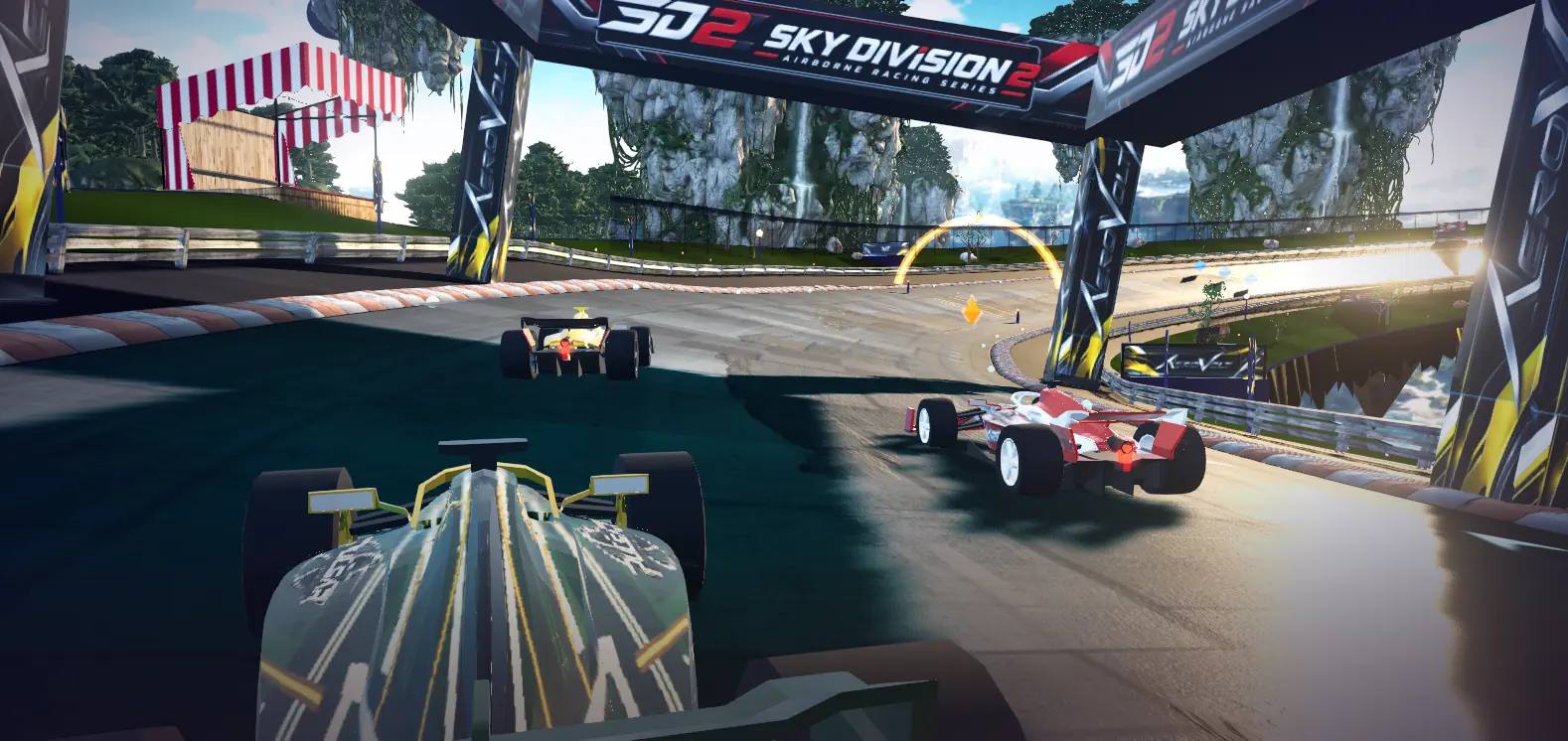
The clock, grid and objective all change the race.
Sky Division 2 exposes six named disciplines from its main menu. They share the same car and track systems, but each one asks the driver to spend attention differently.
Grand Prix
A full-grid race in which position, overtaking, energy use and consistency all matter through the finish.
Elimination
The last driver at the lap boundary drops out. Clean survival matters before outright winning pace.
Qualifying
Two flying laps determine the earned grid slot. Traffic disappears; accuracy becomes the opponent.
Practice
Free laps against your own ghost create a stable place to learn braking points and test setup changes.
Free Play
Choose any route, weather and direction for a configurable race without waiting for campaign progression.
Time Attack
Chase the server leaderboard and load rival ghosts to compare real lines, speed and time loss.
Short heritage layouts grow into long championship routes.
The track directory contains 35 routes in total. The first six preserve the original Sky Division heritage, from Sky Islands and Sunset Ring to Summit Run, Hairpin Gorge and Full Throttle. Later cups move through longer prime, mountain, masters and endurance layouts.
Routes are built above a shared sky world but vary in corner density, elevation, banking, straight length and visual theme. A setup that wins time on a fast corridor can lose it on a sequence of linked mountain corners.
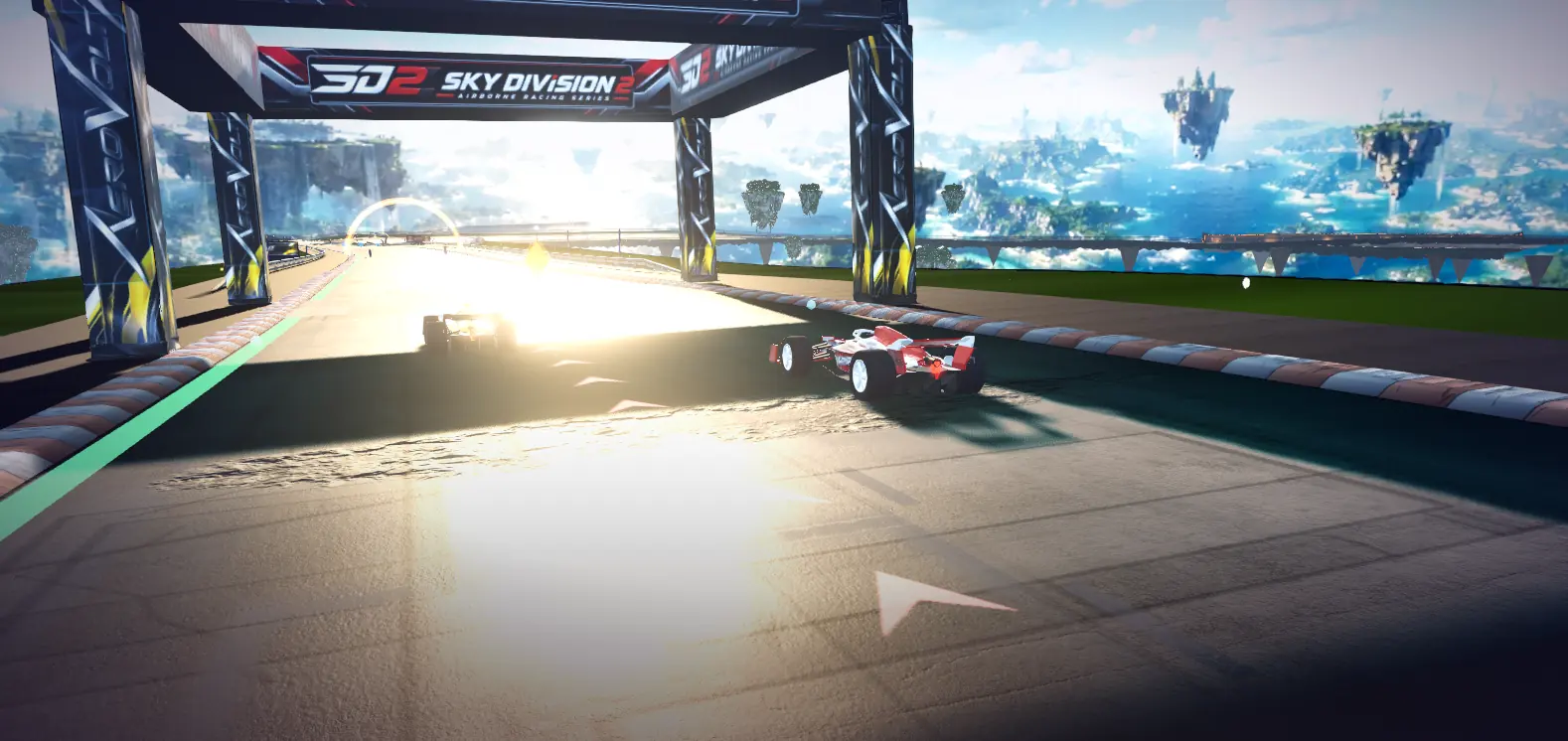
Five starts. Five distant finishes. No next lap.
Cloudline Dash, Canyon Relay, Aurora Run, Ridgebreaker and Terminal Velocity are point-to-point routes. Unlike a circuit, a sprint does not loop back to the start line. Its geometry is extended so one complete run still has the rhythm and duration of a race.
A missed corner cannot be corrected on the next lap, and learning the finish section is as important as learning the launch. That makes sprints useful tests of memory, adaptation and complete-route consistency.
The five point-to-point sprints sit inside the 35-route directory. They are distinct from the six main menu disciplines, which define how a race is scored or practiced.
A known route can still become a new race.
Free Play can reverse direction, choose the forecast and select any track. Reverse mode flips the route flow rather than merely turning the camera around, so braking zones, corner sequences and setup emphasis change.
Dry, rain, changing-to-rain and clearing conditions alter the surface during the run. A forecast can therefore make tyre wear, wet grip, high-speed stability or gentle traction more valuable than a dry qualifying setup.
Compare a line without adding traffic.
Practice records your own ghost, allowing repeated setup or driving comparisons against a visible previous lap. Time Attack extends that idea to the server board, where rival runs can be selected as references.
A ghost is useful because it separates time loss from finishing position. You can see whether a shorter final drive gains on corner exit, whether extra wing catches through the fast section or whether a new line simply moves the mistake farther around the lap.
The campaign gives every result a consequence.
Direct modes are ideal for learning and experimentation. The campaign connects race results to points, money, cup progression and the same team garage. Qualifying determines the start, races earn the budget and longer series increase the cost of unstable development choices.
That is where route, format and simulation meet: endurance makes wear matter for longer, qualifying narrows the goal to two clean laps and elimination punishes one badly timed mistake.
Continue to the five-cup career →